The 2026 GEO Blueprint: How Consumer Brands Dominate AI-Driven Product Discovery
In the age of AI-driven discovery, dominance is no longer about "ranking #1"—it’s about "becoming the citation." To win, consumer brands must execute a three-pronged strategy:
- Technical Clarity: Transform your website into a machine-readable Knowledge Graph using deep Entity Schema.
- Information Gain: Move beyond generic keywords to provide high-fact-density content that offers unique, verifiable data.
- Cross-Platform Consensus: Seed your brand signals on high-authority "trusted sources" like Reddit and niche industry wikis.
At Next AI Site, we turn these technical requirements into your competitive unfair advantage.
With over 30 years of experience in the IT industry, I have witnessed every major digital evolution—from the birth of the web to the rise of search engines. Today, Next AI Site is leading the next frontier: GEO (Generative Engine Optimization). We ensure your brand doesn't just exist online but is actively recommended and cited by Large Language Models (LLMs) like ChatGPT, Gemini, and Perplexity.
Below is our 2026 GEO Roadmap specifically designed for the CPG/FMCG sector, integrating the unique technical and content capabilities of the Next AI Site platform.
Phase 1: AI-Ready Infrastructure (The Foundation)
Goal: Ensure AI crawlers can "understand" and "extract" precision product data.
AI engines no longer just index keywords; they map entities and relationships.
- 1.1 Global Entity Definition: We establish your brand’s "Knowledge Graph" across platforms like WikiData to link your brand directly to your core product categories.
- 1.2 Advanced Schema Deployment: * Our Core Capability: Our platform utilizes an automated schema engine to deploy deep Product Markup (materials, dimensions, functional parameters) and Merchant Return Policy. AI assistants prioritize brands with transparent, machine-readable service policies.
- 1.3 PIM (Product Information Management) Synchronization: We ensure data consistency across your site and AI interfaces to prevent "hallucinations" caused by conflicting product info.
Phase 2: Conversational Content Strategy (The Authority)
Goal: Provide "high fact-density" content that covers the entire consumer journey.
- 2.1 "Best Choice" Buying Guides: We create deep-dive articles targeting prompts like "Best healthy food options for sensitive diets in 2026." These include structured comparison tables that AI models love to parse.
- 2.2 High-Precision FAQ Matrix: * Our Core Capability: We use "Information Gain" analysis to identify content gaps. By providing direct, factual answers under 100 words, we maximize the likelihood of your content being cited as the "Primary Source" in AI-generated answers.
- 2.3 Use-Case Narratives: We pivot from specs to solutions—describing how a product solves a specific pain point (e.g., "Eco-friendly packaging that maintains freshness for 48-hour shipping").
Phase 3: Authority & Social Proof (The Trust)
Goal: Increase the "Trust Score" of your brand via external signals.
- 3.1 Third-Party Review Layouts: We facilitate placements on specialized review sites and authoritative platforms. AI models prioritize 3rd-party consensus over self-proclaimed excellence.
- 3.2 Community Sentiment (Reddit/Specialized Forums): * Our Core Capability: We cultivate brand presence in professional and enthusiast communities. In 2026, AI training sets heavily weigh "real human discussions" from platforms like Reddit to determine brand popularity and reliability.
- 3.3 Expert E-E-A-T: we ensure all health-related content is authored by certified experts, linked to verified profiles to boost the "Experience" and "Authoritativeness" metrics that AI agents track.
Phase 4: AI Agent Specialization (The Precision)
Goal: Fine-tune content for the specific logic of shopping assistants.
- 4.1 Visual Attribute Tagging: We optimize image Alt-tags with precise descriptions (e.g., "Deep Emerald packaging, 500g eco-bag") to help AI answer visual-based queries.
- 4.2 "Fact-Density" Monitoring: * Our Core Capability: We use proprietary GEO tools to scan your pages for "fluff." AI favors content rich in percentages, lab results, and certifications (e.g., Organic or Non-GMO seals).
- 4.3 Policy Transparency: We highlight shipping speeds and warranty terms in prominent, crawlable sections—a key differentiator for AI when recommending "reliable" brands.
Strategic Comparison: SEO vs. GEO
🚀 Success Spotlight: Revitalizing a Scarborough Health Food Brand
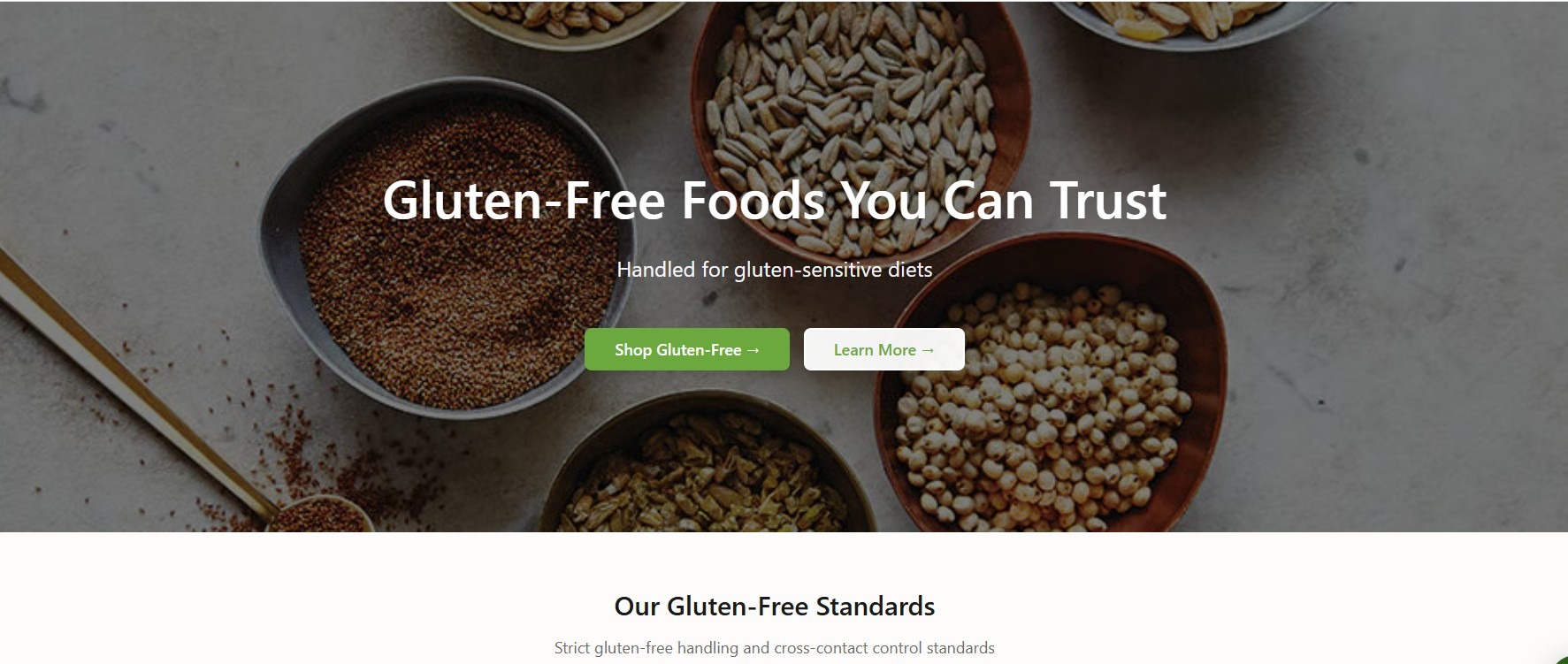
We recently applied this GEO framework for a health food distributor in Scarborough specializing in organic and gluten-free products.
The Challenge
Despite 25+ years of local expertise, the brand was "invisible" to AI assistants. When users asked for healthy food delivery in the GTA, AI recommended larger, less specialized competitors.
Our Strategy
We deployed high-density technical schemas through the Next AI Site platform and built a content matrix focused on "Information Gain"—answering specific questions about organic sourcing and delivery logistics that competitors ignored. We also seeded brand signals in local community forums to build a "consensus of trust."
The Result
Within three months, the brand's Share of Voice (SOV) in AI recommendations for their niche surged by over 300%. AI agents now accurately cite their specific delivery zones and organic certifications, making them a "Top Recommended" vendor for health-conscious shoppers in the region.
Frequently Asked Questions (FAQ)
Q1: How soon can I see results from GEO optimization?
A: Unlike traditional SEO which can take 6+ months, GEO improvements can often be seen within 4–8 weeks. Once we update your site’s Entity Schema and inject high-fact-density content, AI models like Perplexity and ChatGPT Search can re-index and begin citing your brand in real-time answers.
Q2: Which AI platforms does Next AI Site optimize for?
A: Our framework is model-agnostic. We optimize for the entire generative ecosystem, including ChatGPT (OpenAI), Gemini (Google), Claude (Anthropic), and Perplexity.
Q3: Why does "Fact Density" matter more than keywords?
A: AI models are designed to reduce "hallucinations." They prefer citing sources that provide specific, verifiable data points (like percentages or certifications) because it makes their generated answers more credible.
Next AI Site is not just building websites; we are building brand identities that AI can trust and recommend.
Want to see how AI currently views your brand? Visit https://nextaisite.ca for a complimentary AI Brand Diagnostic Report.
About the Author Yuhai Liu is the Founder of Next Inc. and a seasoned technologist with 30 years of experience in the IT industry. A pioneer in web architecture and AI-driven growth systems, he now leads the charge in Generative Engine Optimization (GEO) and Shopify ecosystem innovation. Connect with his deep industry insights on LinkedIn.